


Updated . Published .
SI2 Clarity Diamonds: How to Find an Eye Clean SI2
SI2 means slightly included 2. An SI2 diamond has inclusions that a skilled grader finds easily at 10x magnification, and some can be seen without magnification. It is the eighth of GIA's 11 clarity grades, between SI1 and I1. Eye clean SI2 diamonds exist, but you must check each one.
- SI2 sits one grade below SI1 and one grade above I1, the first of the included grades.
- SI2 costs less than SI1 for the same carat, color and cut.
- Eye clean SI2 diamonds are harder to find than eye clean SI1 diamonds.
- Small white inclusions near the edge are the easiest to hide. Dark crystals under the table are the hardest.
- Inclusions that reach the surface, such as cavities and knots, can weaken an SI2 diamond.
Search SI2 diamonds Check a diamond for free
What does SI2 clarity mean?
Clarity grades describe the inclusions inside a diamond and the blemishes on its surface. Inclusions form as the diamond grows. Common types are feathers (small internal cracks), crystals (tiny trapped minerals), pinpoints, and clouds (groups of pinpoints that can look hazy together).
On GIA's clarity scale, the SI group (SI1 and SI2) means the inclusions are noticeable to a skilled grader at 10x. SI2 is the lower of the two. Its inclusions are larger, more numerous or easier to see than in SI1.
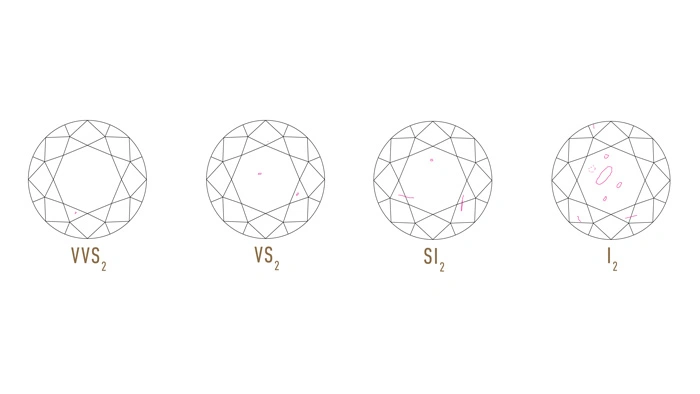
Our diamond clarity chart shows all 11 grades in one table.
SI2 vs SI1 vs I1: how do the neighboring grades compare?
SI2 sits between SI1 and I1. It is the lowest grade where you can still find eye clean stones with some effort. For the same carat, color and cut, a higher grade usually costs more.
| Grade | Seen at 10x | Eye clean? |
|---|---|---|
| SI1 | Noticeable inclusions, easy to find | Sometimes |
| SI2 | Noticeable inclusions, very easy to find | Less often |
| I1 | Obvious inclusions that may affect brilliance | Rarely |


Left: an SI1 diamond. Right: an SI2 diamond with dark inclusions spread across it. Both photos are magnified many times. Click a photo to search diamonds of that grade.
Is an SI2 diamond eye clean?
Sometimes, but less often than SI1. The SI2 diamond above has dark inclusions across the stone, and many of them will show without magnification. Other SI2 diamonds have only white or edge inclusions and look clean face up.
You cannot tell from the grade alone. You need the photos, the video and the report. Our guide to eye clean diamonds covers the warning signs in detail.
Is SI2 clarity worth it?
An eye clean SI2 can look as good as a much higher grade for less money. The catch is the search time and the risk of a mistake when you buy from photos.
- SI2 makes sense when you can see the stone in person, or when you are willing to study photos, video and the report closely.
- SI1 or VS2 makes more sense when you want less risk. Read SI1 vs VS2 diamonds to compare them.
Check the fair price for your exact diamond with our diamond price calculator. A good SI2 priced like an SI1 may still be a fair deal.
How to choose an SI2 diamond: 6 checks
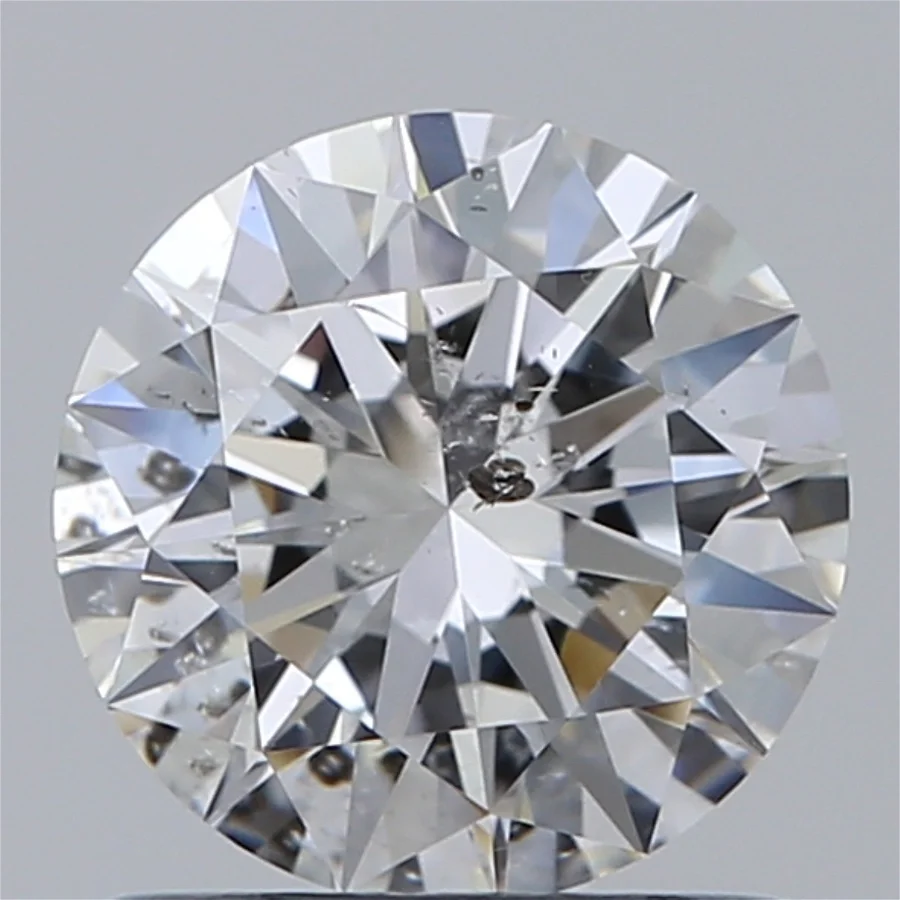
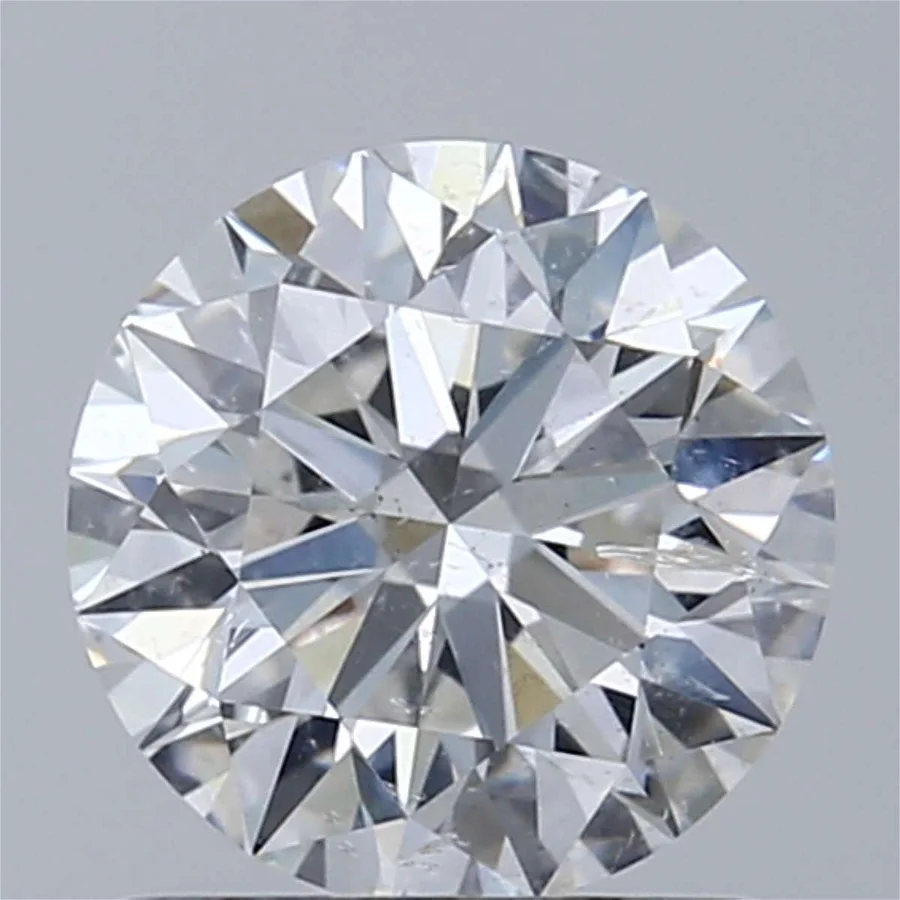
1. Avoid large dark crystals. Dark inclusions are easier to see than white ones. In the pair below, both diamonds are 1 carat, F color, SI2. The one on the left has a large dark inclusion near the center. The one on the right has inclusions that are much harder to see.
2. Prefer inclusions near the edge. The table is the largest flat facet on top, so inclusions under it show the most. Inclusions near the edge are harder to see and can sometimes hide under a prong.
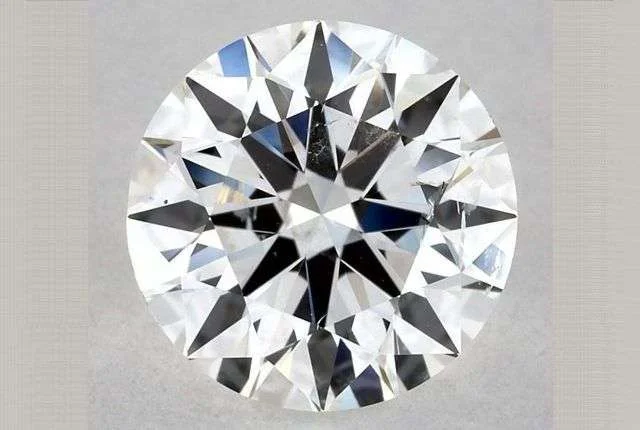
3. Put cut first. A diamond with strong sparkle hides small inclusions better. Look for a high StoneAlgo cut score. The SI2 diamond below scored 9.0 on our scale.
4. Skip inclusions that reach the surface. Cavities, knots and surface-reaching feathers can weaken a diamond, which matters more at SI2.
5. Beware of "clarity grade is based on clouds that are not shown." This report comment means clouds set the grade but are not drawn on the plot. Large clouds can make a diamond look hazy and dull. The diamond below looks fairly clean, but its clouds leave it hazy. Learn how to read a GIA report.
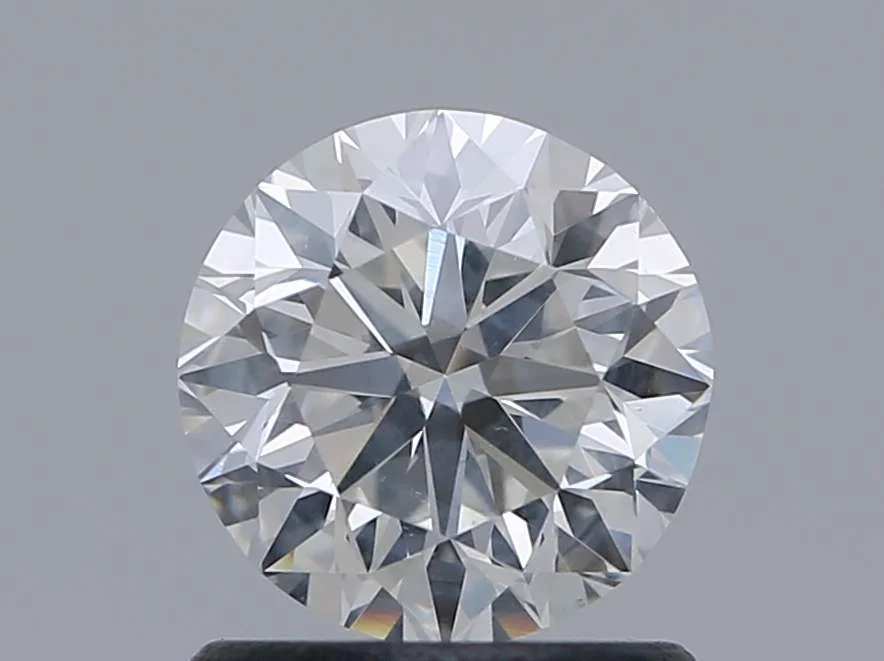
6. Check the direction of feathers and twinning wisps. Think of a knife blade. Seen from the edge, it is a thin line. Seen from the side, it is a wide shape. A feather that runs straight down through the diamond can look like a thin line from above. One that lies flat under the table shows its full width, so it is easier to see.
Frequently asked questions
What does SI2 mean?
SI2 stands for slightly included 2. It is the eighth of GIA's 11 clarity grades. Its inclusions are noticeable to a skilled grader at 10x magnification.
Are SI2 diamonds eye clean?
Some are. Eye clean SI2 diamonds are less common than eye clean SI1 diamonds. Look for small, white inclusions near the edge and no cloud comment on the report.
Is SI2 clarity bad?
No. SI2 is a good value when the stone is eye clean and has no surface-reaching inclusions. It is a poor buy when dark inclusions sit under the table.
What is the difference between SI2 and I1?
I1 is one grade lower. GIA describes I grade inclusions as obvious at 10x, and they may affect transparency and brilliance. Many I1 diamonds show inclusions to the naked eye.
More clarity guides

© 2026 StoneAlgo, Inc. All rights reserved.