


Updated . Published .
Diamond Fluorescence: Good or Bad? Grades, Looks and Price
Diamond fluorescence is a glow, usually blue, that some diamonds give off under ultraviolet light. GIA describes its strength as None, Faint, Medium, Strong or Very Strong. In normal light, most fluorescent diamonds look the same as diamonds without it. Fluorescence lowers the price of colorless diamonds more than lower colors, so faint or medium fluorescence can be good value.
- About 25% to 35% of diamonds show some fluorescence under long-wave UV light, and more than 95% of those glow blue (GIA).
- In a GIA study, average observers saw no systematic effect of fluorescence on how diamonds looked.
- A hazy look is rare: GIA traced it to light-scattering defects in fewer than 0.2% of the fluorescent diamonds it examined.
- In the StoneAlgo price calculator in November 2026, faint fluorescence priced a 1 carat round D about 8% lower, and a K about 3% lower.
- Our advice: faint suits any color, medium suits H and lower, and strong suits J and lower if you see the diamond on video first.
🛡️ Check your diamond 💎 Search diamonds
What is diamond fluorescence?
Fluorescence is visible light that some diamonds give off while they are exposed to ultraviolet (UV) light. Long-wave UV is part of sunlight, so a diamond can fluoresce outdoors as well as under a lab lamp (GIA). The glow stops when the UV source is removed. Most fluorescent diamonds glow blue.
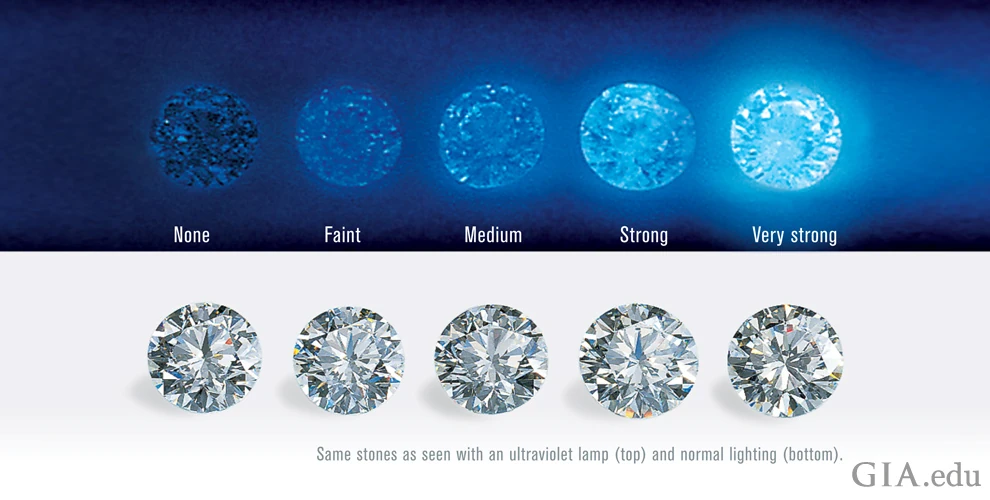
The same five diamonds under a UV lamp (top) and in normal light (bottom). Image: GIA.
GIA treats fluorescence as an identifying characteristic. It is not one of the 4Cs, and it does not change the color grade: GIA grades color in a setup designed to minimize the influence of fluorescence (GIA).
What are the diamond fluorescence grades?
| Grade on a GIA report | Shorthand in listings | What it means | Our advice |
|---|---|---|---|
| None | NON | No reaction seen under the lab's UV lamp | Any color grade |
| Faint | FNT | A weak glow under UV light | Any color grade; often priced lower from D to H |
| Medium | MED | A clear glow; the report names its color | H color and lower |
| Strong | STG | A bright glow; the report names its color | J color and lower; see a video first |
| Very Strong | VST or VSTG | A very bright glow; the report names its color | Only after you have seen the diamond |
GIA reports describe how strong the glow is under long-wave UV light. If it is Medium or stronger, the report also names its color, for example "Medium Blue".
Is diamond fluorescence good or bad?
For most diamonds, it makes no visible difference. In GIA's study of blue fluorescence, average observers saw no systematic effect on appearance. Some trade professionals think blue fluorescence helps diamonds from I to M look whiter. Others believe strong blue fluorescence makes a diamond look hazy or oily. GIA found that haze comes from rare light-scattering defects, in fewer than 0.2% of the fluorescent diamonds it examined.
Fluorescence does have two real effects. It changes the price, and under black lights a fluorescent diamond can glow blue. Judge a diamond by how it looks to you in daylight and indoor light.
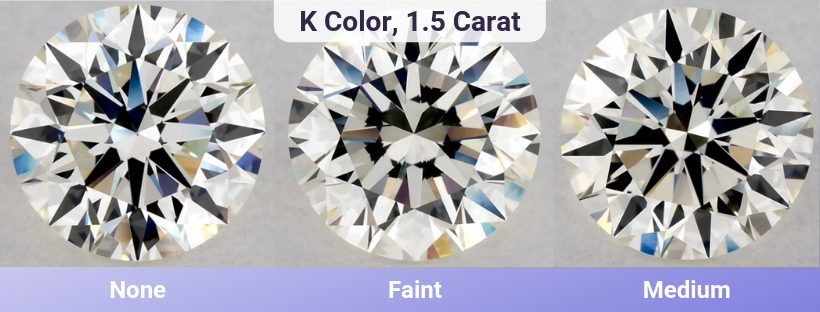
Three 1.5 carat K color diamonds with None, Faint and Medium fluorescence. In normal light they look alike.
How does fluorescence affect diamond price?
Fluorescence lowers the price of high color grades the most. GIA notes that diamonds from D to H with very strong fluorescence often sell for less than diamonds with none. Lower colors show smaller discounts, because some buyers think blue fluorescence helps them look whiter.
| Color grade | Faint | Medium | Strong |
|---|---|---|---|
| D | 8% less | 18% less | 23% less |
| E | 8% less | 17% less | 21% less |
| F | 8% less | 14% less | 19% less |
| G | 5% less | 10% less | 16% less |
| H | 5% less | 6% less | 11% less |
| I | 2% less | 12% less | 12% less |
| J | 2% less | About the same | 7% less |
| K | 3% less | About the same | 5% less |
Price compared with the same diamond with no fluorescence: a 1 carat round natural diamond with VS2 clarity and excellent cut, polish and symmetry. Read from the StoneAlgo price calculator on November 14, 2026. These steps match the results of our older study of GIA graded 1 carat round diamonds with VS1 clarity and excellent cut, polish and symmetry, so treat them as a guide.
To see the price of your exact diamond with each fluorescence grade, use the diamond price calculator. To weigh real listings against each other, put up to four diamonds in the diamond comparison tool.
🛡️ Check your diamond 💎 Search diamonds
Which fluorescence grade is best for each color grade?
- D to F (colorless): There is no tint for fluorescence to offset, and it lowers the price the most. Faint is a quiet saving. See medium or stronger on video first. More in our D color guide.
- G and H: Faint and medium cost a little less and rarely change the look. More in our G color guide.
- I and J: Blue fluorescence may help these face up whiter. In I, medium and strong cost about 12% less. More in our I color guide.
- K: Faint or medium costs about the same as none and may help the look. More in our K color guide.
Our diamond color guide covers the full D to Z scale.
None, faint, medium, strong and very strong fluorescence
None fluorescence
None means the lab saw no reaction under its UV lamp. Most diamonds fall here, since only about 25% to 35% fluoresce. It suits any color grade, and it is the baseline for the prices above.
Faint fluorescence
Faint is a weak glow under UV light. For most people it does not change how a diamond looks in normal light. A diamond with faint fluorescence often costs a little less, most of all from D to F, so it is one of the easiest ways to save.
Medium fluorescence
Medium is a clear glow under UV light, and the report names its color, usually blue. In the colorless grades it lowered the price by 14% to 18% in our calculator. In H and lower it can be good value, and some trade professionals think it helps lower colors face up whiter.
Strong fluorescence
Strong is a bright glow under UV light. Most strong blue diamonds look normal in daylight, but check a daylight video for any haze. It makes the most sense from J down, where it costs less and may help the color.
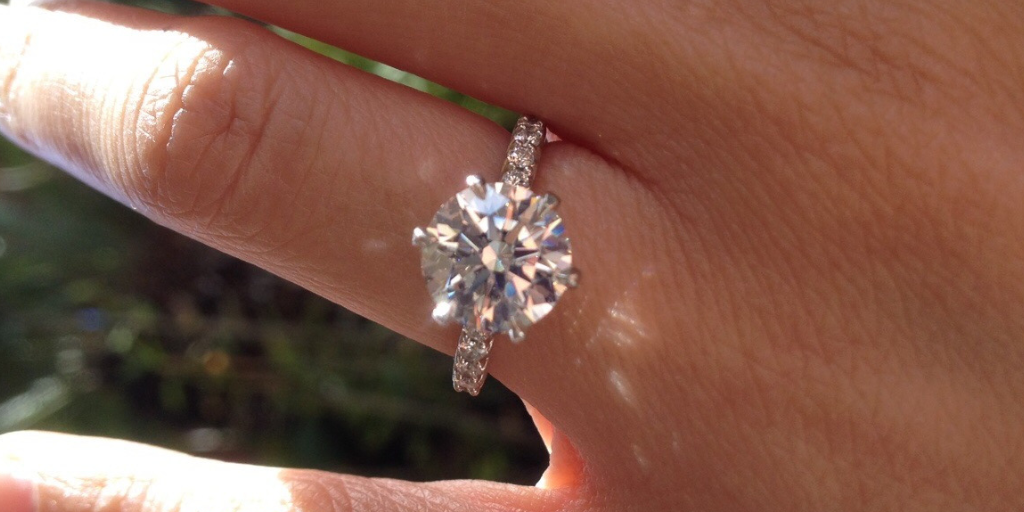
A J color diamond with strong fluorescence, photographed in natural light.
Very strong fluorescence
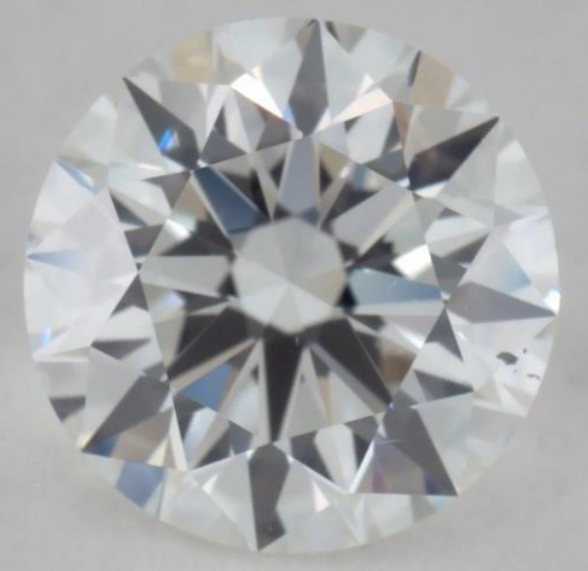
Very Strong is the brightest grade. Haze is still rare, but this is the grade to see in person or on a clear daylight video before you buy.
Does sunlight make a fluorescent diamond glow?
Sunlight contains long-wave UV, so a fluorescent diamond reacts to it, and GIA suggests you view a diamond in several kinds of light, including natural daylight. A diamond also reflects its surroundings, so a blue sky can make any diamond look blue, with or without fluorescence. Under black lights, such as at a club or a bowling alley, a fluorescent diamond can glow brightly.
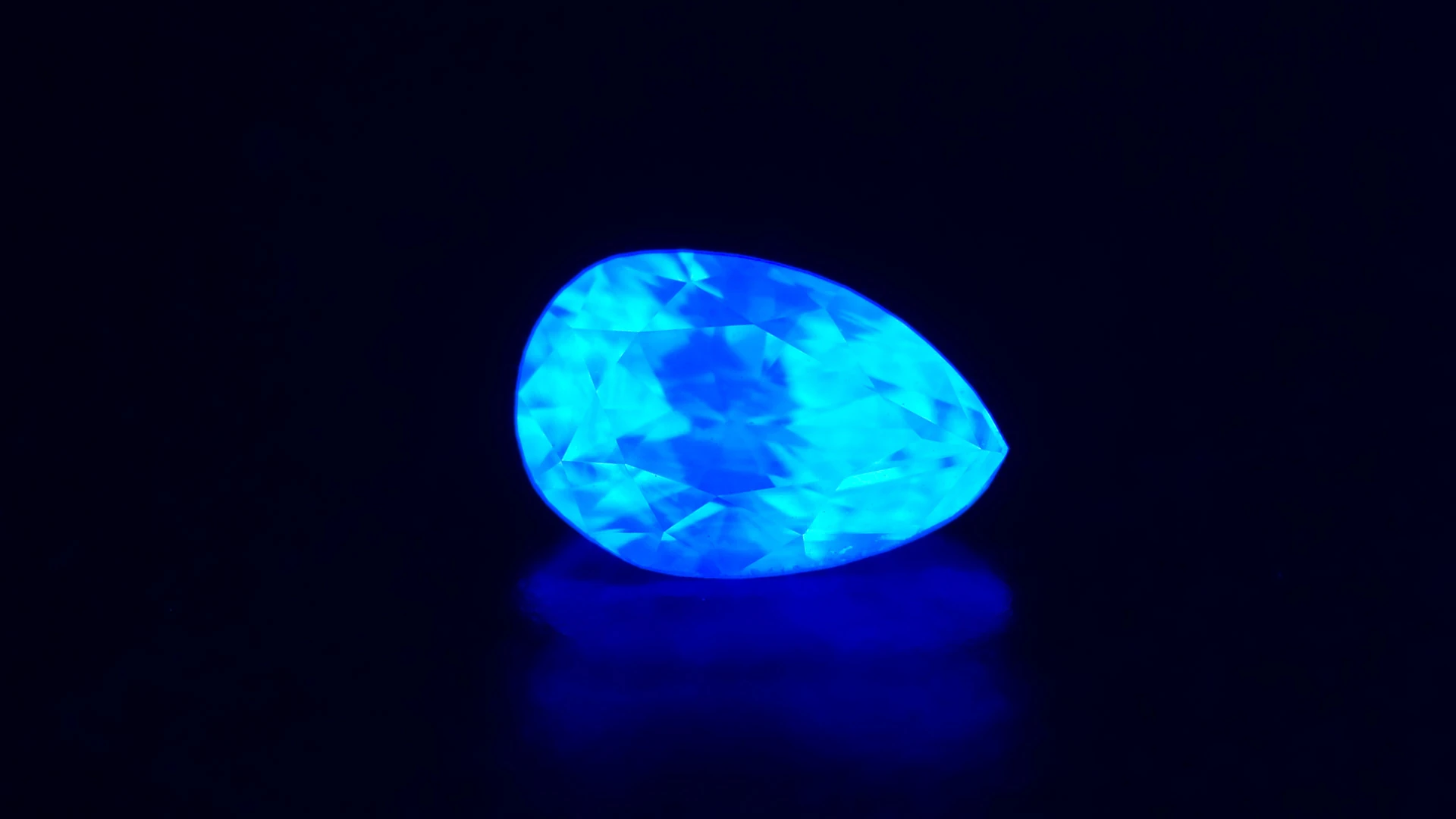
What colors can diamond fluorescence be?
More than 95% of fluorescent diamonds glow blue. A rare few glow other colors, such as yellow or green (GIA).
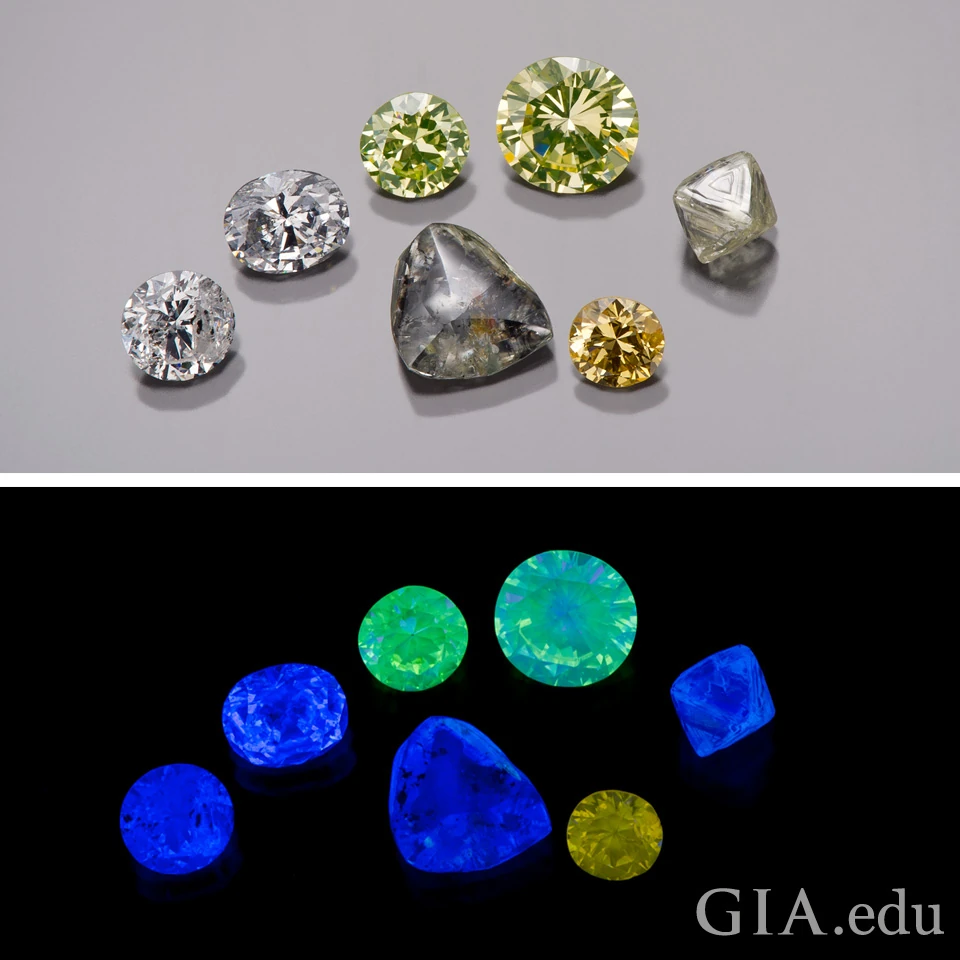
The same diamonds in normal light (top) and under UV light (bottom). Image: GIA.
Where do I find fluorescence on a GIA report?
A GIA report lists fluorescence with polish and symmetry, in the additional grading information. Our guide to reading a GIA certificate shows where each item sits. You can also enter a GIA report number in the diamond check to see the full details and a Fair Price Estimate.
Frequently asked questions
Is faint fluorescence bad in a diamond?
No. Faint fluorescence has no visible effect for most people, and it often lowers the price, most of all in D to F colors.
Is medium blue fluorescence good or bad?
It depends on the color. In H and lower it can be good value and may help the diamond face up whiter. In D to F it lowered the price by 14% to 18% in our calculator, with no gain in looks.
Does fluorescence change a diamond's color grade?
No. GIA grades color in a setup designed to minimize the influence of fluorescence, and it lists fluorescence on the report as a separate item.
Should I avoid strong fluorescence?
Only if a daylight video shows haze, which is rare. Strong blue fluorescence costs less, and from J down it can be a good buy.
What does None fluorescence mean?
The lab saw no reaction under its UV lamp. With 25% to 35% of diamonds showing some fluorescence, None covers most of the rest.
